





Indian Railways Launches First Hydrogen Train for Green Future
Indian Railways Launches First Hydrogen Train for Green Future
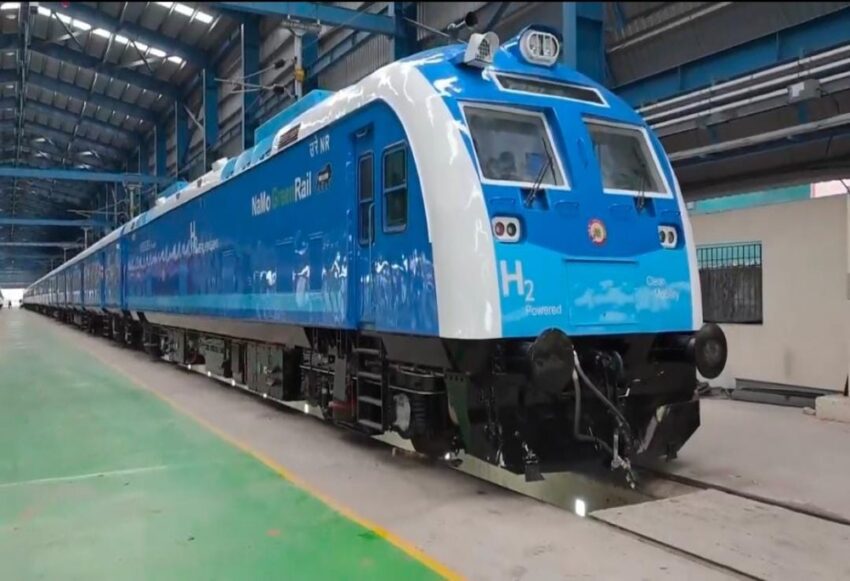
Indian Railways is advancing its sustainable transport mission with the successful testing of a ₹136-crore hydrogen-powered train, set to debut on the Jind–Sonipat route in Haryana. This development marks a significant milestone in India’s efforts to cut greenhouse gas emissions and integrate renewable energy into its transport system.
The initiative is part of the “Hydrogen for Heritage” programme, aimed at modernizing and decarbonizing India’s rail network. The route was selected for its manageable length and readiness, with the goal of replacing diesel-powered locomotives on non-electrified tracks with zero-emission alternatives.
Technological Breakthrough in Green Rail Transport
The hydrogen train is based on a Diesel Electric Multiple Unit (DEMU) design, retrofitted with hydrogen fuel cells in place of traditional diesel engines. Equipped with a 1,200 HP engine and a passenger capacity of 2,600, it stands as the world’s longest and most powerful hydrogen-powered train.
Emitting only water vapour, this eco-friendly mode of transport offers both efficiency and sustainability. It is particularly suited for heritage and non-electrified routes like Shimla–Kalka, Darjeeling, and Ooty, where conventional electrification is challenging. This technology also has the potential to boost eco-tourism in these regions.
Nationwide Rollout and Economic Impact
Under the Hydrogen for Heritage programme, Indian Railways plans to introduce 35 hydrogen-powered trains across the country, with an investment of around ₹80 crore per train and ₹70 crore per route for refueling and maintenance facilities.
These trains will serve both passenger and freight transport, reducing reliance on fossil fuels. Beyond environmental benefits, the project will generate employment, stimulate the green economy, and strengthen energy security. Its success could also position India as a global leader in sustainable rail transport.
Boost to Tourism and Heritage Accessibility
Deploying hydrogen trains on heritage lines such as Shimla–Kalka, Darjeeling, and Ooty will bring dual benefits: reducing environmental impact while improving connectivity to renowned tourist destinations. These scenic and culturally rich areas will gain a clean, efficient, and affordable transport option.
The move also opens opportunities for expanding tourism infrastructure into remote areas, creating economic benefits for local communities while aligning with India’s sustainable tourism vision.
Aligning with India’s Net-Zero Goals
The hydrogen train project is a vital step in Indian Railways commitment to achieving net-zero carbon emissions by 2030. Alongside other renewable energy projects, it reflects India’s long-term green infrastructure strategy.
Hydrogen fuel cells are seen globally as a promising solution for decarbonizing transport, and India’s investment in this sector will support both domestic sustainability goals and global climate change efforts.
A Green Future for Indian Railways
With the planned rollout of hydrogen-powered trains nationwide, Indian Railways is paving the way for an eco-friendly, future-ready transport system. The technology promises cleaner travel, economic growth, and greater accessibility for passengers.
The launch on the Jind–Sonipat route is set to be a landmark moment- signaling a transformative shift towards sustainable mobility, enhanced tourism potential, and a greener future for India’s rail network.