






Spiritual Tourism Corridors Transforming India’s Travel Landscape
Spiritual Tourism Corridors Transforming India’s Travel Landscape
India’s spiritual heritage has always drawn pilgrims from across the world, but in recent years, spiritual tourism corridors have emerged as a powerful force reshaping the country’s travel and tourism ecosystem. Backed by large-scale infrastructure development, improved connectivity, and integrated destination planning, these corridors are transforming sacred journeys into seamless, experience-led travel circuits.
From the banks of the Ganga to the heart of ancient temple towns, India’s faith corridors are not only reviving religious tourism but also creating new economic, cultural, and lifestyle travel opportunities.
What Are Spiritual Tourism Corridors?
Spiritual tourism corridors are integrated travel routes that connect multiple religious destinations through enhanced road, rail, air, and urban infrastructure.
These corridors focus on:
- Improved accessibility and last-mile connectivity
- Pilgrim-friendly amenities such as accommodation, sanitation, and crowd management
- Heritage conservation and temple redevelopment
- Blending spiritual travel with cultural and experiential tourism
Rather than isolated pilgrimages, travellers now experience multi-destination spiritual journeys designed for comfort, safety, and deeper engagement.
Key Spiritual Corridors Driving India’s Tourism Growth
Kashi–Ayodhya–Prayagraj Corridor (Uttar Pradesh)
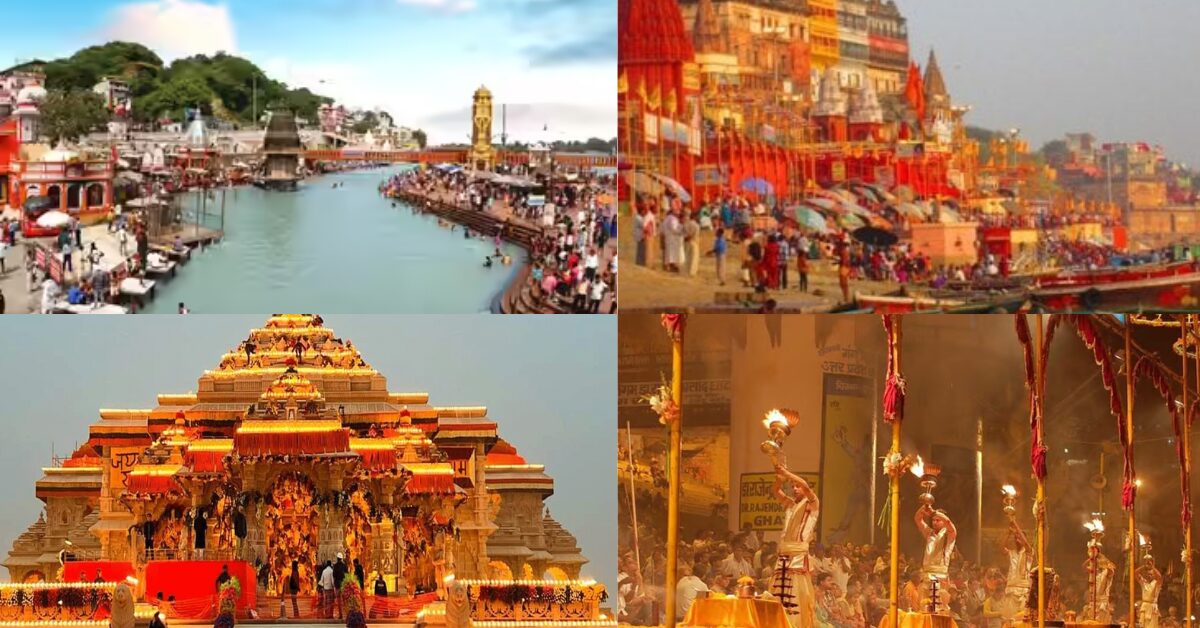
One of the most transformative developments in recent years, this corridor has positioned Uttar Pradesh as a global spiritual tourism hub. The revival of Kashi Vishwanath Dham, the Ram Mandir in Ayodhya, and large-scale events such as the Mahakumbh have led to unprecedented pilgrim footfall.
Enhanced highways, railway upgrades, riverfront development, and new hotels have encouraged travellers to extend their journeys across multiple sacred cities rather than visiting a single destination.
Char Dham Corridor (Uttarakhand)
The Char Dham circuit Badrinath, Kedarnath, Gangotri, and Yamunotri has undergone a major transformation through improved road infrastructure and safety enhancements in challenging Himalayan terrain.
The corridor has made high-altitude pilgrimage safer and more accessible, while also boosting adventure tourism, homestays, and eco-friendly hospitality in nearby towns.
Buddhist Circuit (Uttar Pradesh, Bihar, Nepal)
Connecting sites such as Bodh Gaya, Sarnath, Kushinagar, and Lumbini, the Buddhist Circuit caters to international spiritual travellers, particularly from Southeast Asia and East Asia.
Upgraded airports, international flights, and better tourism facilities have helped position India as a key destination for Buddhist heritage tourism, blending spirituality with history and cultural exploration.
Southern Temple Corridors (Tamil Nadu, Andhra Pradesh, Karnataka)
Temple towns such as Tirupati, Rameswaram, Madurai, Kanchipuram, and Srirangam are now part of well-connected spiritual circuits. Improved road networks, darshan management systems, and pilgrim accommodation have enhanced visitor experience while preserving traditional temple culture.
These corridors have also encouraged longer stays and regional travel across South India.
How Spiritual Corridors Are Redefining Travel Experiences
From Pilgrimage to Experiential Travel
Modern spiritual travellers increasingly seek immersive experiences guided heritage walks, temple architecture tours, river ceremonies, wellness rituals, and local cuisine. Faith corridors allow travellers to combine devotion with culture, wellness, and slow travel.
Boost to Local Economies and Employment
Spiritual tourism corridors have created livelihoods across hospitality, transport, handicrafts, food services, and local guiding. Tier-2 and Tier-3 cities benefit significantly as pilgrims explore beyond temple complexes.
Infrastructure Meets Heritage Preservation
Redevelopment projects focus not only on capacity expansion but also on restoring historic ghats, corridors, and sacred spaces. This balance between infrastructure and heritage conservation enhances India’s global appeal as a spiritual destination.
- The Role of Connectivity and Technology
- New airports and expanded flight routes to religious cities
- High-speed rail and improved railway stations
- Digital darshan bookings and crowd control systems
- Smart city initiatives in temple towns
These developments ensure smoother travel while managing large-scale pilgrim movement efficiently.
India’s Global Positioning as a Spiritual Destination
With growing interest in wellness, mindfulness, and spiritual discovery, India’s faith corridors resonate strongly with global travellers. The combination of ancient traditions and modern infrastructure positions the country as a year-round spiritual tourism destination, not limited to festivals alone.
The Road Ahead for Spiritual Tourism in India
As India continues to invest in integrated spiritual corridors, the future of faith-based travel looks increasingly experiential, inclusive, and sustainable. These corridors are not just about religious visits they represent a holistic travel movement where spirituality meets lifestyle, culture, and community.